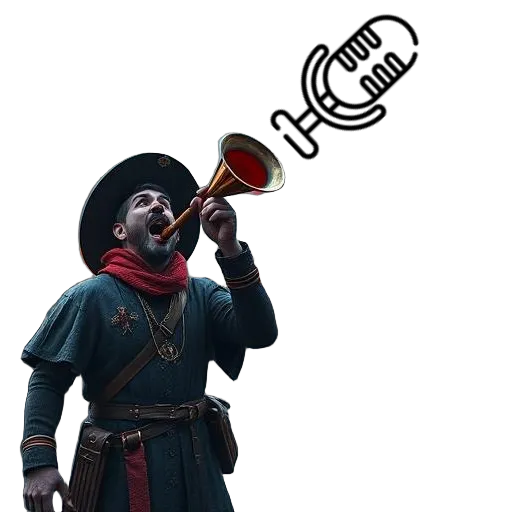
Henry VII’s reign starts with dirty feet and a dirty little problem. Fresh from the Battle of Bosworth, Henry Tudor is trying to sell England on his brand-new dynasty. Tasks include: marry the right princess, rewrite the rules, invent a royal myth and hope nobody notices the joins. But when a diehard Ricardian slips through the net and whips up a rebellion, Henry has no time to lose. From plague-ridden London to rebellious Northern Yorkshire, the story of England’s first Tudor king begins with panic, propaganda and rapid peril. – Don’t forget to catch this week’s bonus episode where Dan delves deeper into the history behind each episode. This week, Dan tells producer Al about King Henry’s three-pronged strategy to make him legitimate, while the pair take a detour about how late medieval kings displayed their piety — aside from feet washing. That’s all for you to discover on our Patreon: patreon.com/thisishistory – A Sony Music Entertainment production. Find more great podcasts from Sony Music Entertainment at sonymusic.com/podcasts To bring your brand to life in this podcast, email [email protected] Learn more about your ad choices. Visit megaphone.fm/adchoices Images used in this podcast are generated and/or edited using an AI application that does not infringe on any copyright or intellectual property. – Presented by Dan Jones Sound Design - Amber Devereux Producer - Alan Weedon Senior Producer - Dominic Tyerman Junior Producer - Dulcie Whadcock Executive Producer - Louisa Field Executive Producer - Dan Jones Production Manager - Jen Mistri Production Coordinator - Eric Ryan Head of Content - Chris Skinner Learn more about your ad choices. Visit podcastchoices.com/adchoices
While there was more violence in the medieval world than there is today on the whole, much of that was in the context of warfare. And even in medieval warfare, there were many people who felt the need for limits. This week, Danièle speaks with James Houlihan about medieval perspectives on warfare, attitudes towards noncombatants, and the steps one Abbot of Iona took to protect the innocent.<br /><br />This podcast is made possible by the generous support of listeners like you! To find out how to help spread the joy of medieval history, please visit patreon.com/themedievalpodcast
He’s the man who schemed, smashed and slashed his way to power. But as it turns out, winning a crown is far easier than keeping one. This Is History: The Tudors traces the unlikely rise of King Henry VII — the man responsible for creating England’s most iconic royal family. Their story begins on 22 August 1485, a day that changed English history forever. At the Battle of Bosworth Field, Henry Tudor defeated King Richard III, ending more than three centuries of Plantagenet rule and claiming the English throne as Henry VII. He inherits a fractured kingdom, weakened by the Wars of the Roses, while ambitious nobles and foreign powers are ready to rally behind rival claimants. The results are often extraordinary. Two pretenders emerge from obscurity: a ten-year-old boy and a Flemish teenager who reinvent themselves as long-lost princes. Both claim to be princes once locked up in the Tower of London and launch audacious bids for the throne. Across the Channel, kings, emperors and a vengeful English princess lend support to their cause, turning political intrigue into an international crisis. It's a far cry from the story Henry VII hoped to tell. His marriage to Elizabeth of York was meant to unite the rival houses of Lancaster and York and bring lasting peace to England. Diplomatic alliances strengthen England's position abroad, while explorers push further across the Atlantic than ever before. Yet invasions, rebellions, trade disputes and betrayals threaten everything Henry has built. It’s a story packed with romance, betrayal, jealousy, revenge — and at least one weird case of a king giving someone a foot-rub. So who’s afraid of Henry Tudor? Not as many as he’d like. – As always, Dan’s royal favourites can chime in anytime with Dan and the rest of the royal court on Patreon, too. Become a royal favourite today: patreon.com/thisishistory – A Sony Music Entertainment production. Find more great podcasts from Sony Music Entertainment at sonymusic.com/podcasts To bring your brand to life in this podcast, email [email protected] Learn more about your ad choices. Visit megaphone.fm/adchoices – Presented by Dan Jones Producer - Alan Weedon Senior Producer - Dominic Tyerman Junior Producer - Dulcie Whadcock Executive Producer - Louisa Field Executive Producer - Dan Jones Production Manager - Jen Mistri Production Coordinator - Eric Ryan Head of Content - Chris Skinner Learn more about your ad choices. Visit podcastchoices.com/adchoices
In the fifteenth-century, a woman named Jehanne reported a sexual assault to the city authorities of Dijon, setting in motion a detailed criminal investigation that has survived in the records. This week, Danièle speaks with Sara McDougall about what Jehanne's story can tell us about truth and lies, investigative procedures in fifteenth-century France, and contemporary attitudes towards survivors.<br /><br />This podcast is made possible by the generous support of listeners like you! To find out how to help spread the joy of medieval history, please visit patreon.com/themedievalpodcast
The story of disgruntled citizens feeling the need to rise up against a rigged system and distant elites is one that defines our moment. But we’re not unique in that feeling. Mistrust of the elite goes back a long way — like when England’s peasants almost toppled the ancien regime of King Richard II in 1381. And that’s the focus of Oscar-nominated director Paul Greengrass’s latest film, The Uprising. Starring Andrew Garfield as a disgruntled ploughman, Cosmo Jarvis as Wat Tyler — and with our very own Dan Jones serving as historical consultant — the film takes us into the tumult of 14th-Century London to help explain why ordinary people brought the reign of King Richard II to the brink. In this very special In Conversation episode, Dan and Paul explore how they told the story of the Peasants Revolt on the silver screen, while Paul peels back the curtain about how historic films actually get made — and why ‘accuracy’ is the wrong question. Plus, they reflect on why the lessons of the Peasants Revolt have incredible relevance to the fractious politics of today. Catch The Uprising in cinemas from: September 11, US and Canada (and select US theatres from September 10) October 9, UK October 30, Latvia – Remember to stick around for Paul’s bonus episode with Dan, where Paul gives Dan’s his top five favourite historical films. That’s all for you to discover on our royal court on Patreon: patreon.com/thisishistory – A Sony Music Entertainment production. Find more great podcasts from Sony Music Entertainment at sonymusic.com/podcasts To bring your brand to life in this podcast, email [email protected] Learn more about your ad choices. Visit megaphone.fm/adchoices – Presented by Dan Jones Producer - Alan Weedon Senior Producer - Dominic Tyerman Junior Producer - Dulcie Whadcock Executive Producer - Louisa Field Executive Producer - Dan Jones Production Manager - Jen Mistri Production Coordinator - Eric Ryan Head of Content - Chris Skinner Learn more about your ad choices. Visit podcastchoices.com/adchoices
From gruesome visions of torment, to Sunday holidays from the flames, to absolutely epic images of Jesus freeing lost souls at the point of a sword, medieval people couldn’t get enough of their fire and brimstone. The question is: why? This week, Danièle speaks with Stephen C.E. Hopkins about where medieval people got their ideas about the afterlife, how they adapted these ideas across cultures, and why everyone was so obsessed with hell.<br /><br />This podcast is made possible by the generous support of listeners like you! To find out how to help spread the joy of medieval history, please visit patreon.com/themedievalpodcast
Did King Arthur exist? Amy Jeffs isn't fussed. In this episode, the historian and artist behind Arthur: A New Life takes Dan Jones beyond Camelot and the search for a "real" Arthur, into a world of Welsh myth, Breton storytelling, medieval chronicles, haunted landscapes and hyperbolically violent kings. Together, they try to understand why one of Britain's most compelling legends has endured, and why centuries of writers, artists and dreamers keep remaking him. – If you want a deeper dive into the medieval world with Dan and Amy, grab their accompanying bonus episode at patreon.com/thisishistory. There, Amy shares her favourite absurd moments from medieval manuscripts, including the time when St Martin granted a woman’s wish to see her husband covered all over in male genitalia. – A Sony Music Entertainment production. Find more great podcasts from Sony Music Entertainment at sonymusic.com/podcasts To bring your brand to life in this podcast, email [email protected] Learn more about your ad choices. Visit megaphone.fm/adchoices – Presented by Dan Jones Producer - Alan Weedon Senior Producer - Dominic Tyerman Junior Producer - Dulcie Whadcock Executive Producer - Louisa Field Executive Producer - Dan Jones Production Manager - Jen Mistri Production Coordinator - Eric Ryan Head of Content - Chris Skinner Learn more about your ad choices. Visit podcastchoices.com/adchoices
<p>In this episode of the podcast, we talk to Jeremy Simmons about ancient trade in the Indian Ocean, sources for understanding such trade, and how people in both India and the Roman Empire interacted with the many goods merchants carried across the Indian Ocean.</p>
One of the more popular clichéd images of the medieval world is an angry mob with torches and pitchforks, ready to cause wanton destruction. And while there were rebellions on occasion, the truth is much more complex. This week, Danièle speaks with Shane Bobrycki about how the nature of crowds – and how people spoke about them – changed, and how crowds, themselves, point to the uniqueness of the Early Middle Ages.<br /><br />This podcast is made possible by the generous support of listeners like you! To find out how to help spread the joy of medieval history, please visit patreon.com/themedievalpodcast
Two men and two hundred years of history… On this week’s This Is History: In Conversation, Dan Jones meets Mike Livingston — award-winning historian and novelist from across the pond — to discuss the Hundred Years War. A former Secretary-General for the United States Commission on Military History and professor at The Citadel, the Military College of South Carolina, Livingston knows a thing or two about battles. They delve into Livingston’s latest book ‘The Two Hundred Years War’ and discuss : when did the war actually start and end? What did the French really think about it? Is the longbow overrated? – If you want a deeper dive into the Hundred Years War with Dan and Mike, grab their accompanying bonus episode at patreon.com/thisishistory. There, they dig deeper into the gory, the genius and the gruesome medieval warfare involved in England and France’s most enduring military conflict. – A Sony Music Entertainment production. Find more great podcasts from Sony Music Entertainment at sonymusic.com/podcasts To bring your brand to life in this podcast, email [email protected] Learn more about your ad choices. Visit megaphone.fm/adchoices – Presented by Dan Jones Producer - Alan Weedon Senior Producer - Dominic Tyerman Junior Producer - Dulcie Whadcock Executive Producer - Louisa Field Executive Producer - Dan Jones Production Manager - Jen Mistri Production Coordinator - Eric Ryan Head of Content - Chris Skinner Learn more about your ad choices. Visit podcastchoices.com/adchoices
<p>Introducing Audible True Crime, a dedicated podcast feed where we bring you the best podcasts in true crime, with episodes dropping every single week. Find your next bingeable series about unsolved murders, cold cases, scams and mysteries. This is the cream of the crop of Audible podcasts, featuring award-winning series and soon-to-be favorites. Stop pestering your friends or searching “best true crime podcast” on Google. </p><p>Up first, <strong><em>Guru: The Dark Side of Enlightenment</em></strong>: A search for spiritual guidance leads a group of strangers to seek direction from a self-help guru. And not just any guru. James Arthur Ray is an Oprah endorsed motivational speaker and entrepreneur whose unorthodox methods that blend self-improvement and economic advice have won him praise and a growing following. He’s fast becoming a self-help superstar. But Ray’s increasingly extreme methods push his followers to their limits. What are they seeking? What does he offer? And what happens when it all goes too far, and people die? </p><p>Listen to Audible True Crime wherever you get your podcasts. Audible subscribers can binge all episodes on Audible True Crime early and ad-free right now. Join Audible in the Audible App or by subscribing on Apple Podcasts. </p><p>Listen now: <a href="http://link.pscrb.fm/6438e/fdaudibletruecrimeron-93b44" rel="noopener noreferrer" target="_blank">link.pscrb.fm/6438e/fdaudibletruecrimeron-93b44</a> </p><p>See Privacy Policy at <a href="https://art19.com/privacy" rel="noopener noreferrer" target="_blank">https://art19.com/privacy</a> and California Privacy Notice at <a href="https://art19.com/privacy#do-not-sell-my-info" rel="noopener noreferrer" target="_blank">https://art19.com/privacy#do-not-sell-my-info</a>.</p>
At the height of their power, the Ptolemaic dynasty took a great interest in the lands that lay south of the Nile Valley and the waters of the Red Sea. Explorers, elephant hunters, and mining teams travelled along the coastline as far as Somalia, providing invaluable reports about East Africa that would not be rivaled until the Medieval period. They were also able to exploit the riches of the continent, and built the infrastructure that would lead to the Indo-Mediterranean trade routes. These activities would also bring them into contact (and conflict) with the Kingdom of Meroë, the last great Nubian civilization of ancient Kush, who competed for dominance with both the Ptolemies and the Romans. Episode Notes: (https://hellenisticagepodcast.wordpress.com/2026/08/23/125-ptolemaic-egypt-east-africa-the-red-sea-and-nubia/) Episode Transcript: (https://hellenisticagepodcast.wordpress.com/wp-content/uploads/2026/08/125-ptolemaic-egypt-east-africa-the-red-sea-and-nubia-transcript.pdf) Social Media: Twitter (https://twitter.com/HellenisticPod) Facebook (www.facebook.com/hellenisticagepodcast/) Instagram (https://www.instagram.com/hellenistic_age_podcast/) Bluesky (https://bsky.app/profile/hellenisticpod.bsky.social) Show Merchandise: Etsy (https://www.etsy.com/shop/HellenisticAgePod) ImperialWares (https://tinyurl.com/ybmpk7xd) Redbubble (https://www.redbubble.com/people/HellenisticPod/shop?asc=u) Donations: Patreon (https://patreon.com/TheHellenisticAgePodcast) Ko-Fi (https://ko-fi.com/hellenisticagepodcast) Amazon Book Wish List (https://tinyurl.com/vfw6ask)